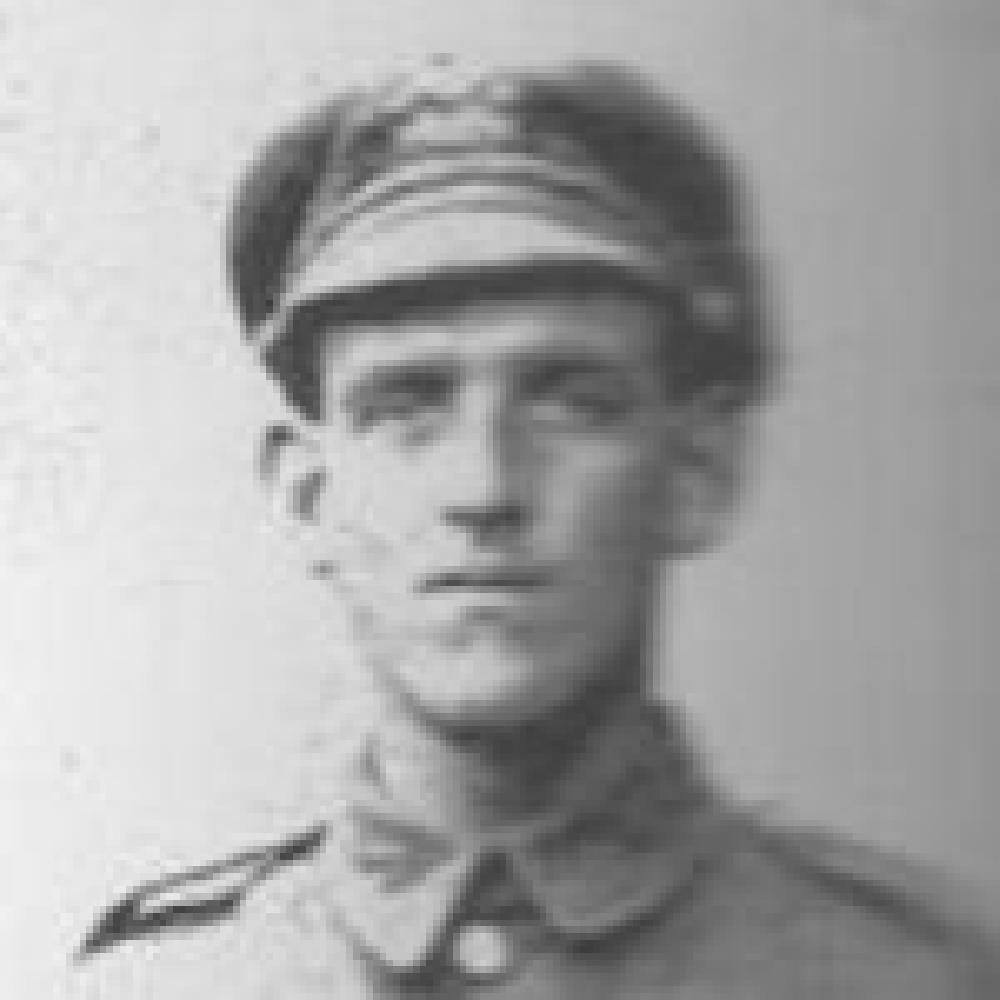
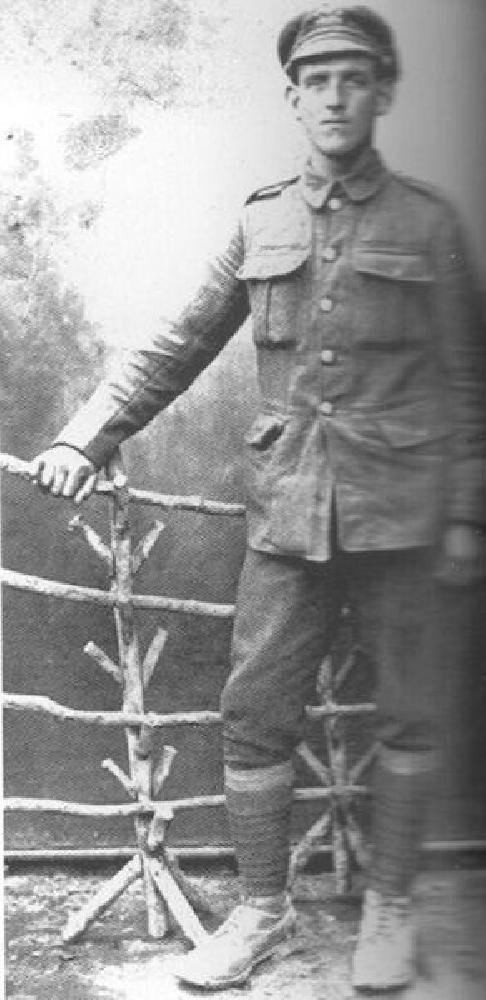
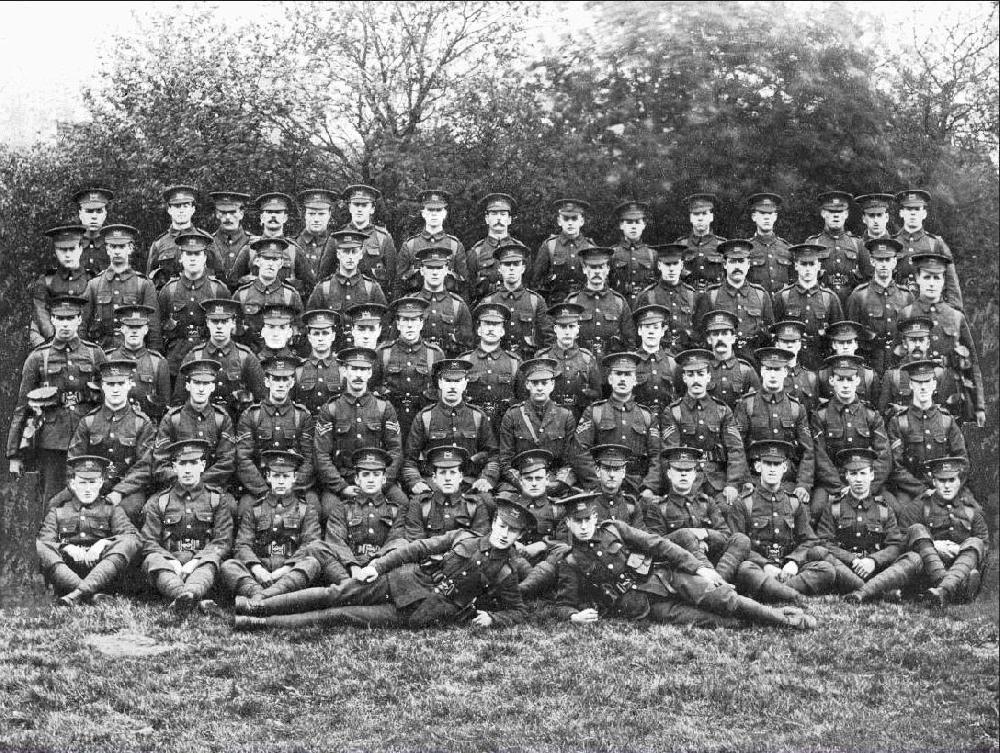
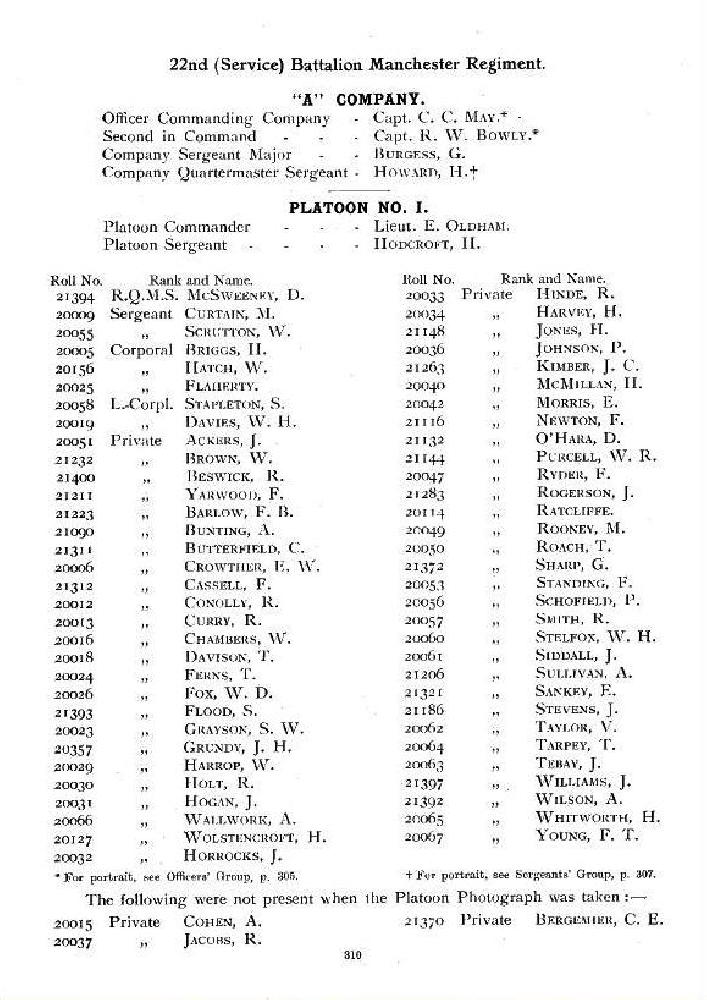
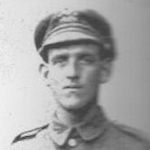
Arthur Bunting : 16th September 1885 to 13th December 1918
- Regiment : 22nd (Service) Battalion of the Manchester Regiment (7th City)
- Service # : 21090
- Rank : Private

An overview of the short life of Arthur Bunting.
Arthur Bunting was born in 1885 to Charles and Emma Bunting and was one of 13 siblings, three of which are recorded as having sadly died by the time of 1911 census.His father was recorded as working as a Beer Storer and then a Coachman, so Arthur's only recorded career as a Coach Painter's Labourer, prior to enlistment into the Manchester Regiment, was probably no coincidence.
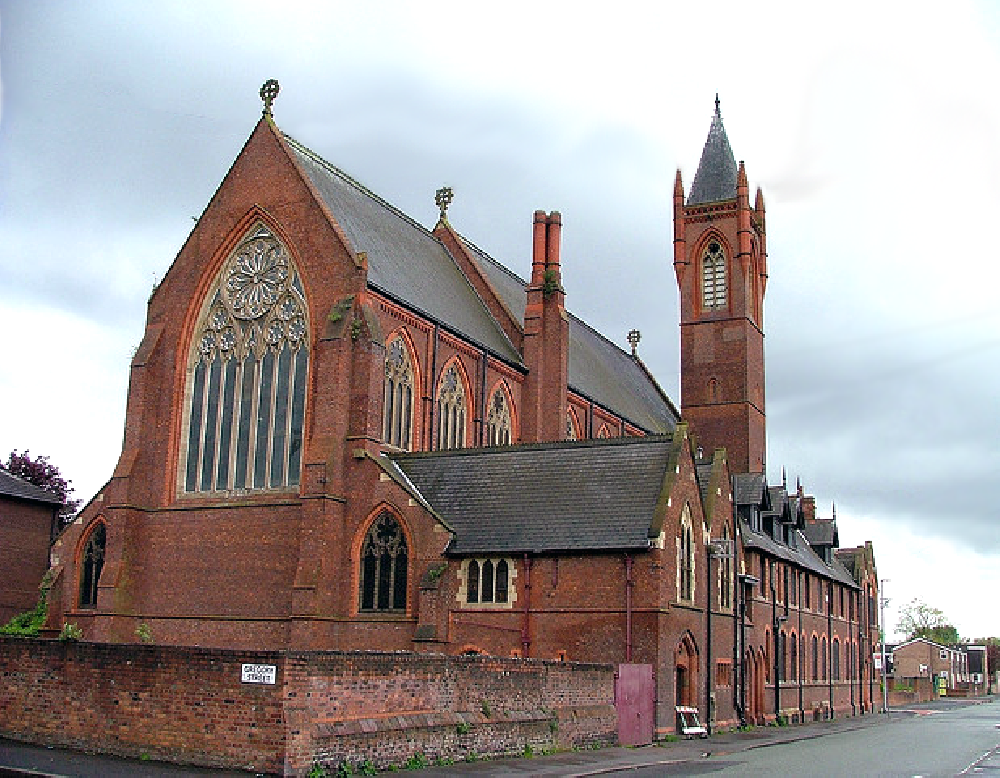
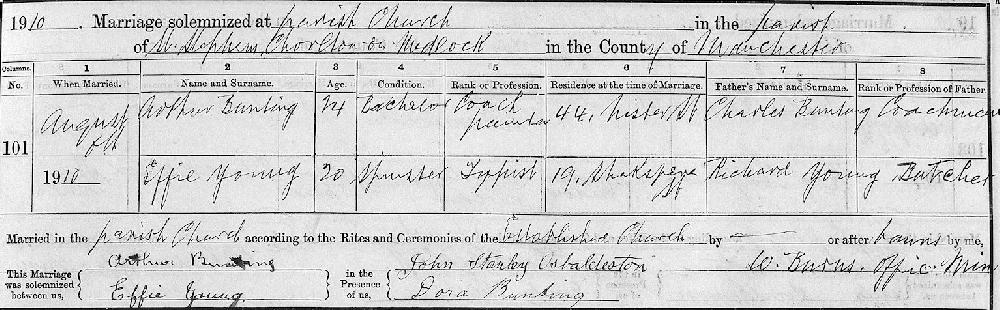
In August 1910 at the age of 25, Arthur married Effie Young at the Church of St . Stephen in the Parish of Chorlton-on Medlock in Manchester, England. Their first daughter, Marjory, appears to have been born in the same year! Two years later, their second daughter, Mary was born.
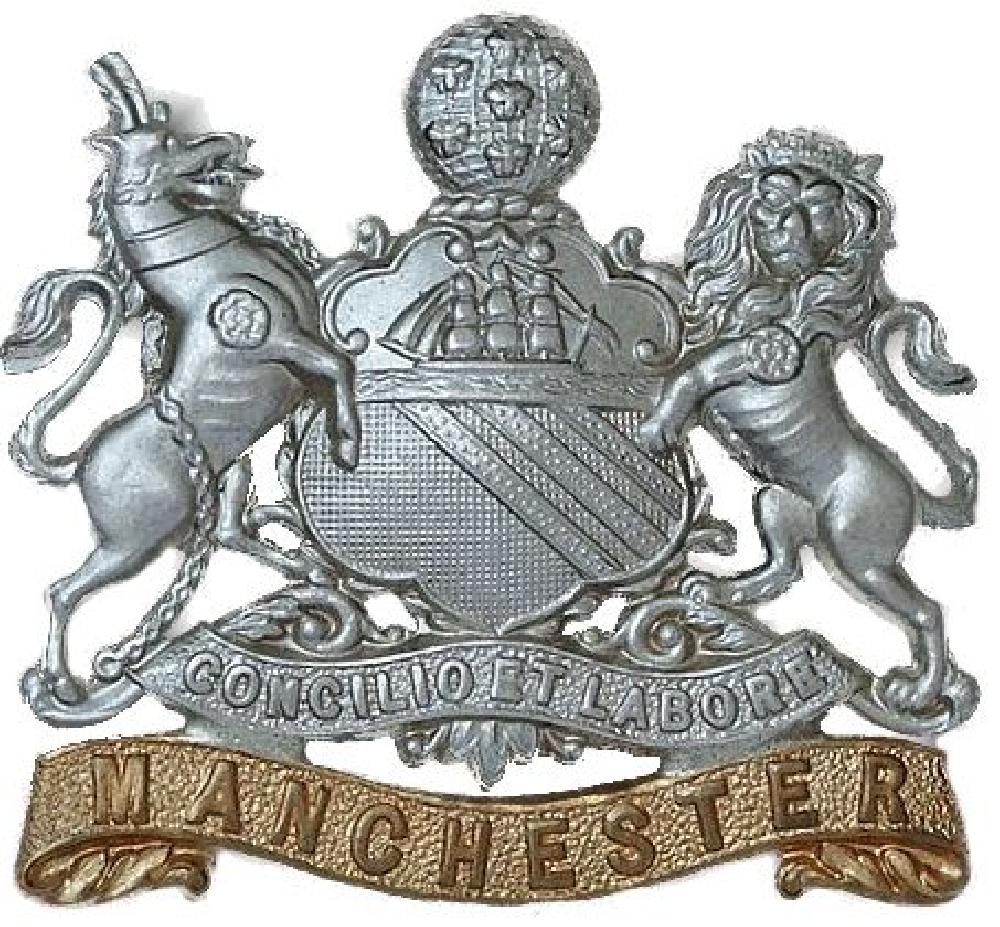
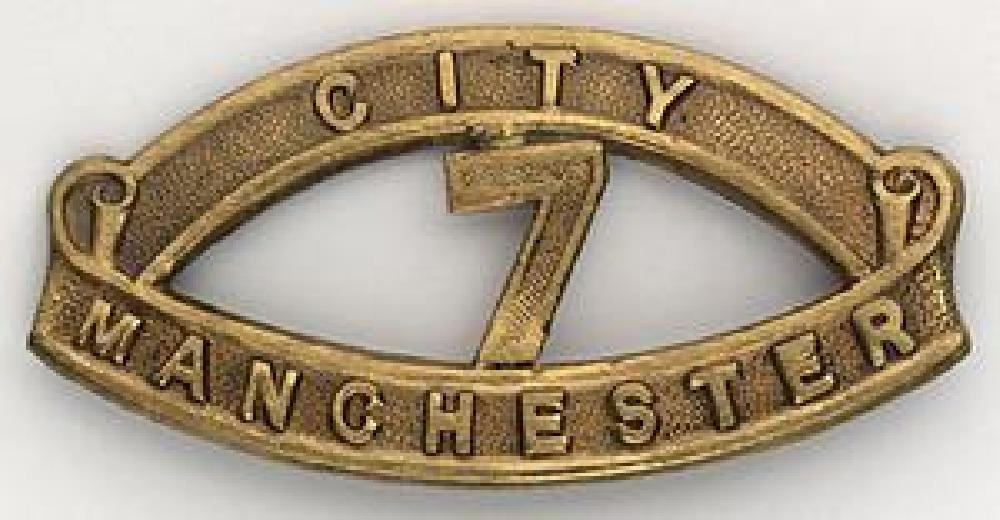
On 21st November 1914, the 22nd Service Battalion of the Manchester Regiment (7th City 'Manchester Pals') was formed by the city Mayor in collaboration with the major corn producers of the city. Arthur enlisted into the Battalion the following month and was soon relocated to Morecombe where the regiment was to be billeted.
Following a brief time at Morecambe, the Battalion was relocated several times between April and September 1915 before finally ending up in France in November of the same year. The following month, Arthur's battalion were transferred to the 91st Brigade (7th Division), where they had their first experience of trench training.
- - - MORE TO BE ADDED HERE - - -
Arthur died aged 33, in Memel, then part of the Free State of Prussia (now Klaipeda, Lithuania) on 13th December 1918. His death was attributed to lung complications following a bout of influenza. It should be noted that Arthur died just over one month following the end of the war on 11th November 1918.
Please click on the year tabs to
open up events for that period.
Arthur Bunting : A timeline
1885
September 16th Manchester (Birth)
Arthur Bunting was born on this day to parent Emma and Charles Bunting.
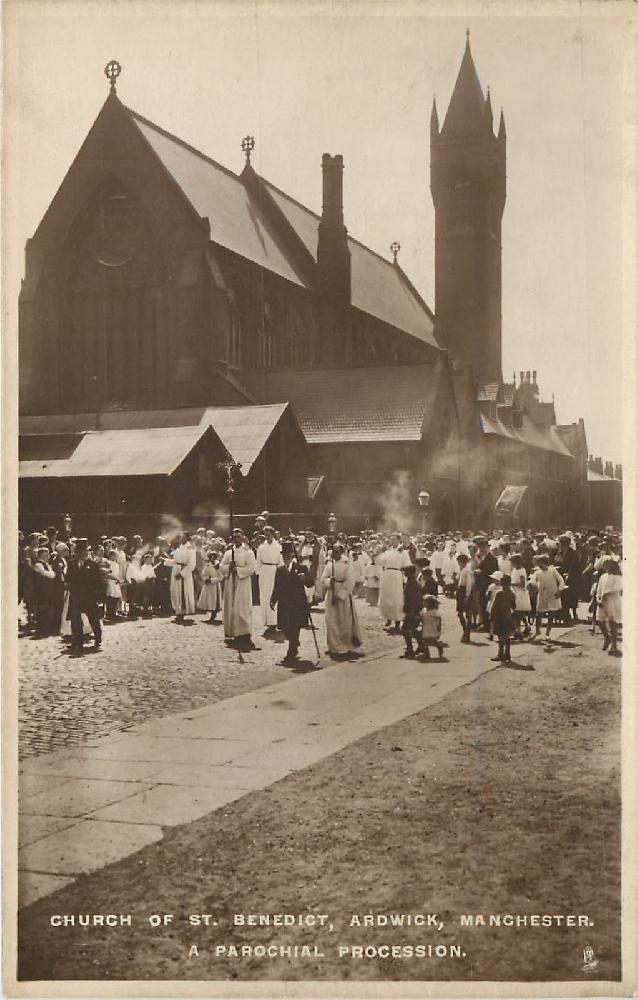
November 8th Ardwick, Lancashire (Babtism)
Images relating to the Baptisms of Arthur Bunting.
Arthur was baptised by John Kitcat at St Benedict church in Ardwick, Lancashire.
NOTES :
Source : Register of Baptisms for Lancs 1880 - 1898, Page 66, Entry 527 / LDS Film 2148079
1910
Exact date unknown. Chorlton (Daughter Born)
Daughter Marjory Bunting born in Chorlton, Lancashire, England
August 6th Church of St. Stephen in the Parish of Chorlton-on Medlock, Manchester (Marriage)
Images relating the marriage of Arthur Bunting to Effie Young.
Arthur married Effie Young at the Church of St . Stephen in the Parish of Chorlton-on Medlock in Manchester, England.
NOTES :
At the time of the marriage, Effie Young was registered as living on Shakespeare Street in Ardwick, Manchester.
She was born on 6th November 1885 and later died in Tameside, Lancashire on 29th July 1974. (#1)
REFERENCE & FURTHER READING :
1912
Exact date unknown. Manchester (Daughter Born)
Daughter Mary A Bunting born.
1914
November 21st Manchester (22nd Battalion Formed)
Images relating to Arthur's enlistment into the 22nd Manchester Battalion (7th City Pals)
22nd Service Battalion of the Manchester Regiment (7th City 'Manchester Pals') was formed.
Pals, or 'Friends'#1 battalions were effectively volunteer recruits of friends, collegues and neighbours that were enlisted together. The idea was to entice as many people as possible to enlist, encouraging groups of friends to be allowed to serve alongside each other in the same battalions without fear of being split up. Battalions were sometimes made up solely of groups of workers from a particulr business, or from old school friends etc.
Arthur's batallion was formed by the Lord Mayor and the major cotton producers of the city.
Pals, or 'Friends'#1 battalions were effectively volunteer recruits of friends, collegues and neighbours that were enlisted together. The idea was to entice as many people as possible to enlist, encouraging groups of friends to be allowed to serve alongside each other in the same battalions without fear of being split up. Battalions were sometimes made up solely of groups of workers from a particulr business, or from old school friends etc.
Arthur's batallion was formed by the Lord Mayor and the major cotton producers of the city.
REFERENCE & FURTHER READING :
December Manchester (Enlisted)
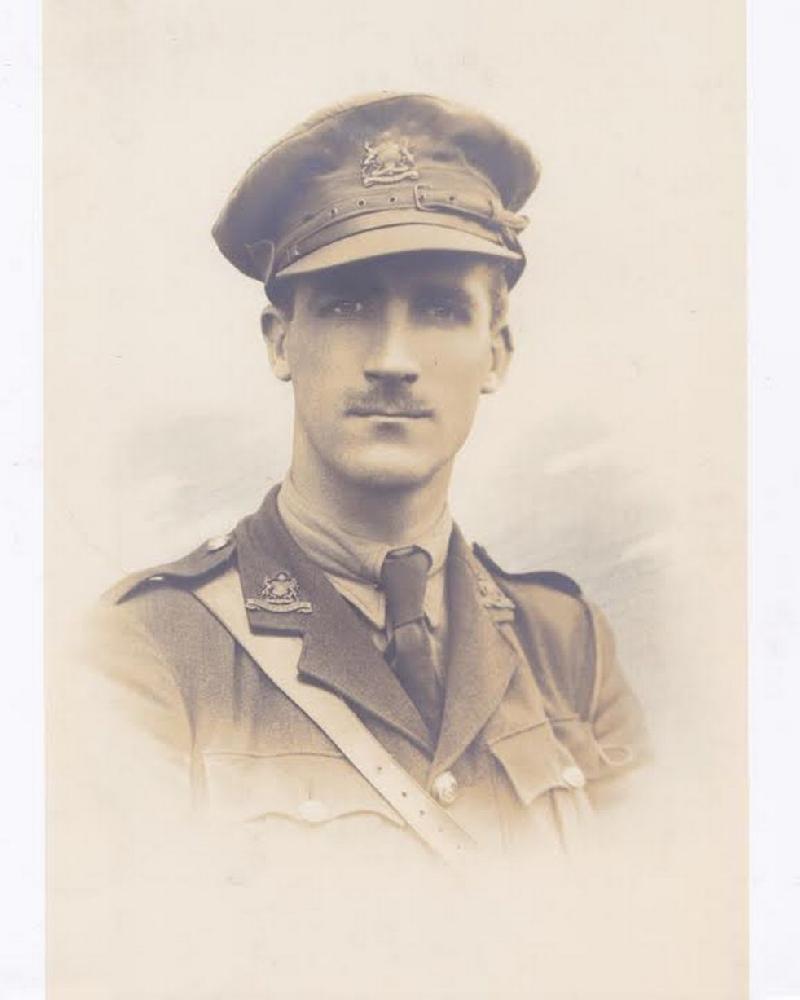
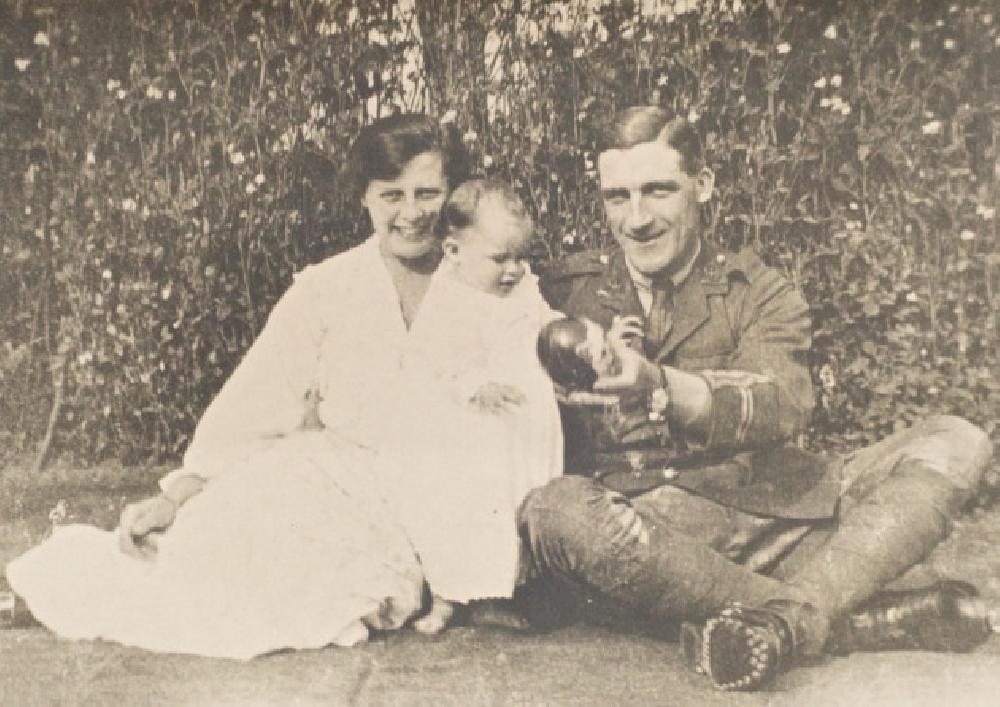
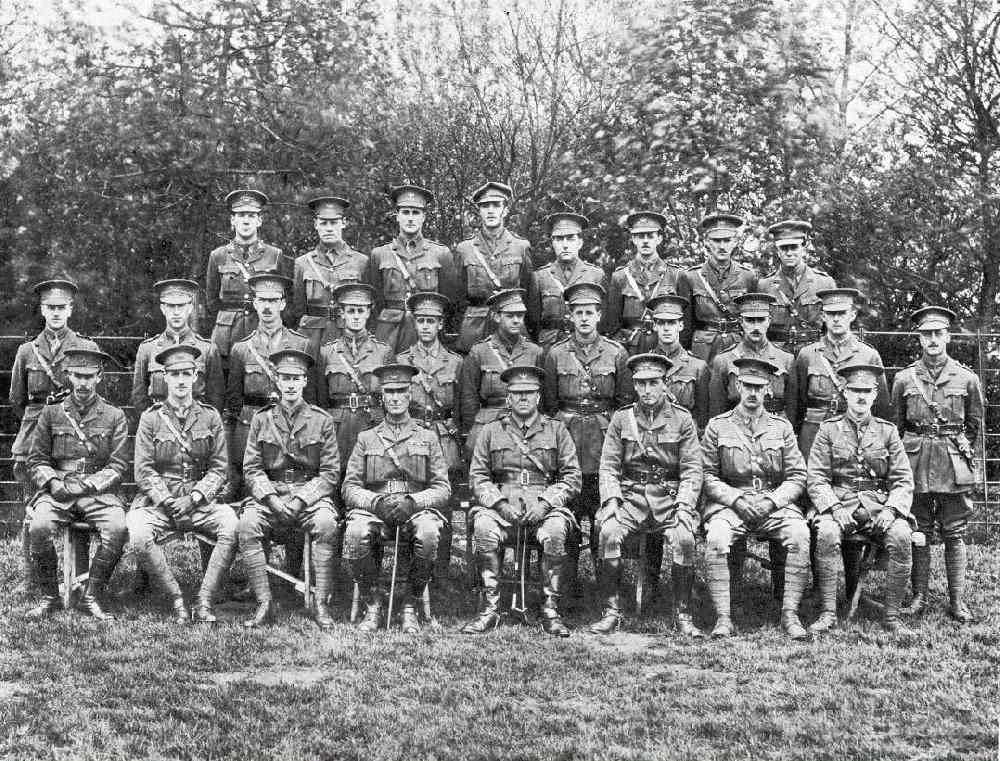
A gallery of images relating to Arthur Bunting, his life and service in the 22nd Manchester Regiment.
Athur Bunting was enlisted into the 22nd (Service) Battalion of the Manchester Regiment (7th City 'Manchester Pals') which had been formed the previous month.
NOTES :
According to Arthur's military service number, Arthur enlisted some time between 4th December 1914 to 6th January 1915. Official records indicate it was in December 2014, but the exact date is unkown.
1915
January Morecambe (Regiment Billeted)
Arthur's regiment were relocated and billeted to Morecambe. It was at that point they effectively became part of the 21st Battalion.
April Grantham (Regiment Relocated)
Arthur's regiment were relocated to Grantham as part of the 91st Brigade, 30th Division.
May 15th Manchester (Son Born)
Arthur's son, James Arthur Bunting was born (never to be seen by his father).
NOTES :
James appears to have died in Stockport, Lancashire, aged 87 in October 2002.
August 10th Grantham (War Office)
Arthur's battalion were taken over by the War Office.
September Larkhill, Salisbury Plain (Regiment Relocated)
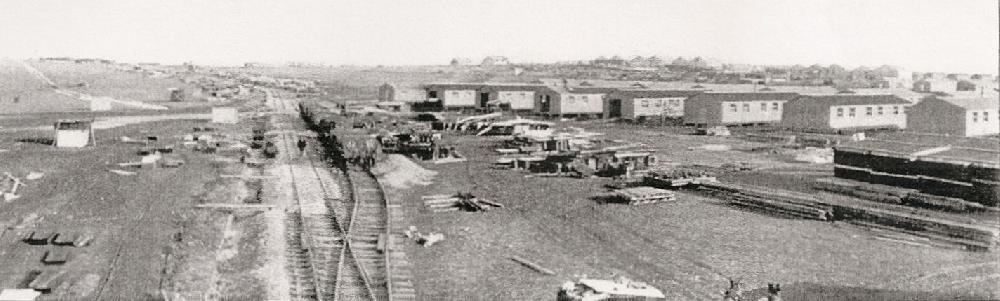
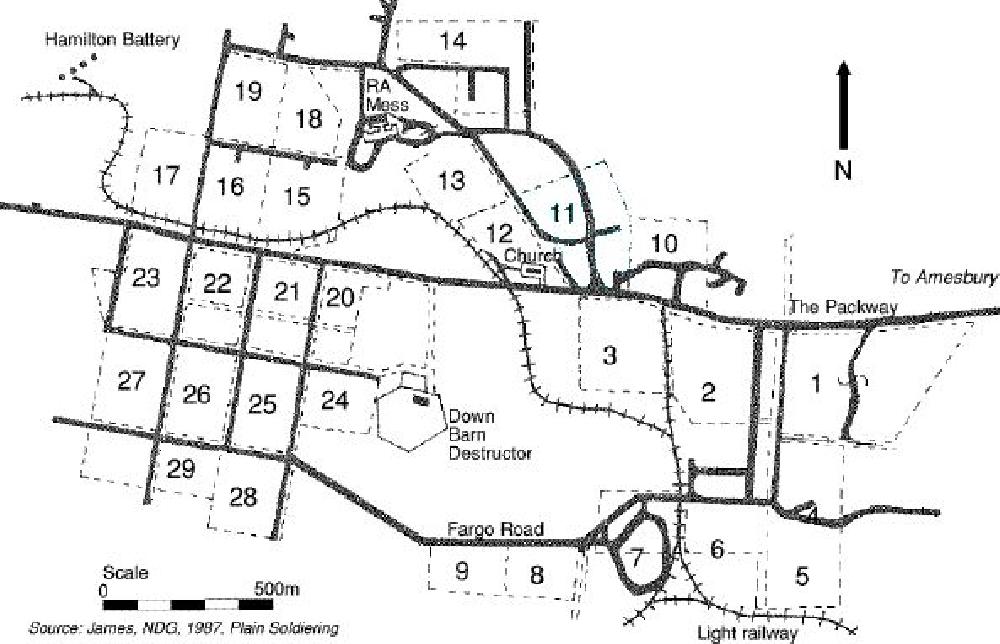
Images for Larkhill Garison (Lark Hill Camp) where Arthur Bunting's battalion spent around two months training.
Regiment moved to Larkhill#1 on Salisbury Plain in Wiltshire.
NOTES :
#1Still in use today by the Army as the School of Artillery, Larkhill construction began in August 1914 and was completed early in 1915. It's original designation was as the School of Instruction for Royal Horse and Field Artillery.
November 10th Folkestone, England to Boulogne, France (Regiment Relocated)
In November of 1915, Arthur's battalion embarked from Folkestone in Kent heading for Boulogne, France. By this time, the battalion was now part of the 91st Brigade, 7 Division.
December 20th Boulogne, France (Regiment Training)
In December 1915, Arthur's battalion were transferred to the 91st Brigade (7th Division), where they had their first experience of trench training in participation with the Royal Irish Fusiliers.
1916
February The Somme (Front Line)
The 22nd Manchesters arrived at the Somme and were positioned opposite the German held position at Mametz; a fortified village east of the commune of Fricourt.
June The Somme (Trench Raid)
Following several weeks of rehearsals, a company of men from the division positioned on the Somme performed a successful, albeit problematic, raid#1 on German listening post. Problems occurred due to the nature of uncut wire in the field, which was also to contribute to so many casualties (on both sides) later in the Battle of the Somme.
NOTES :
#1It is not known whether Arthur or his battalion was actively involved in this raid, but it is certain that the outcome would have had direct affects on his situation at the time.
July 1st The Somme (Charles Campbell May)
Charles Campbell May was not only Arthur's regimental captain; he was also his friend. Arthur was serving with him as his 'batman'#1 and would therefore be close at hand, most of the time.
Charlie had previously been a journalist and as a prolific writer, rigously kept diaries of the day-to day activities he encountered on the front-line (alhough, officially, this was not permitted). His last diary entry on July 1st at 5.45am reads as follows :
At around 7:30am on the morning of July 1st on the first day of the Battle of The Somme, Arthur followed his captain (and friend), Charles May#2 / #3 over the trenches and into no-mans-land with B-Company, entering a barrage of enemy machine-gun fire. WIth them, 50,000 men entered the fray that day, advancing 18 miles directly into enemy fire.
As they reached the German lines, Captain May was hit by a shell.
Arthur stayed with his friend for some three hours, trying to help and bandage his wounds. Arthur eventually managed to get his friend back to the British line for treatment. Charlies May later died from his injuries.
Arthur later wrote to his own wife, explaining in detail what had occurred that day. He wrote,
Further battles ensued that day.
Following a heavy bombardment on German positions, The 22nd Battalion had orders to attack Fricourt in a pincer movement, involving several objectives. The first; to take 'Bucket Trench' was a success. As they moved down the line to the next objective of 'Danzig Alley', they were caught by surprise with Germans emerging pretty much unscathed from underground bunkers. The 22nd were forced to take on reinforcements, after which the objective was successful. Later that day, the area of Mametz#5 was seized due to the efforts of the entire Brigade.
It is unclear if Arthur Bunting was involved in all of the objectives that day, but by the end of it, his friend and a great many others had died. In total, approximately, 120,000 British soldiers were sent into action that day, with 19,000 killed and around 35,000 injured. Casualties ultimately amounted to just under half of those that started that day, many later dying of their injuries in the area of no-mans land.
Of the 800 or so men in the 22nd Battalion that started that day, 472 were either killed, wounded or reported as missing. Almost every officer had died or had been mortally wounded.
Captain Charles Campbell May was just 27 years of age when he was killed. His memorial is located where he fell, in the Dantzig Alley British Cemetery in Mametz.
Charlie had previously been a journalist and as a prolific writer, rigously kept diaries of the day-to day activities he encountered on the front-line (alhough, officially, this was not permitted). His last diary entry on July 1st at 5.45am reads as follows :
"It is a glorious morning and is now broad daylight. We go over in two hours’ time. It seems a long time to wait and I think whatever happens, we shall all feel relieved once the line is launched. No Man’s Land is a tangled desert... Unless one could see it one cannot imagine what a terrible state of disorder it is in. Our gunnery has wrecked that and his front-line trenches all right. But we do not yet seemed to have stopped the machine guns. These are pooping off all along our parapet as I write. I trust they will not claim too many of our lads before the day is over. Now I close this old diary down for the next few days since I may not take it into the line. I will keep a record of how things go and enter it up later."
At around 7:30am on the morning of July 1st on the first day of the Battle of The Somme, Arthur followed his captain (and friend), Charles May#2 / #3 over the trenches and into no-mans-land with B-Company, entering a barrage of enemy machine-gun fire. WIth them, 50,000 men entered the fray that day, advancing 18 miles directly into enemy fire.
As they reached the German lines, Captain May was hit by a shell.
Arthur stayed with his friend for some three hours, trying to help and bandage his wounds. Arthur eventually managed to get his friend back to the British line for treatment. Charlies May later died from his injuries.
Arthur later wrote to his own wife, explaining in detail what had occurred that day. He wrote,
"I had just turned the corner of the trench when I heard the shell burst, and Captain called to me. I nursed him best I could, and tied his limbs together with my puttees#4, poor fellow, and while I was with him Dear I said my prayers over and over again, for it looked a thousand to one on us both being blown to pieces, and no cover to get under. It was just a case of awaiting your turn next please, but it didn't come and here we are. . ."
Further battles ensued that day.
Following a heavy bombardment on German positions, The 22nd Battalion had orders to attack Fricourt in a pincer movement, involving several objectives. The first; to take 'Bucket Trench' was a success. As they moved down the line to the next objective of 'Danzig Alley', they were caught by surprise with Germans emerging pretty much unscathed from underground bunkers. The 22nd were forced to take on reinforcements, after which the objective was successful. Later that day, the area of Mametz#5 was seized due to the efforts of the entire Brigade.
It is unclear if Arthur Bunting was involved in all of the objectives that day, but by the end of it, his friend and a great many others had died. In total, approximately, 120,000 British soldiers were sent into action that day, with 19,000 killed and around 35,000 injured. Casualties ultimately amounted to just under half of those that started that day, many later dying of their injuries in the area of no-mans land.
Of the 800 or so men in the 22nd Battalion that started that day, 472 were either killed, wounded or reported as missing. Almost every officer had died or had been mortally wounded.
Captain Charles Campbell May was just 27 years of age when he was killed. His memorial is located where he fell, in the Dantzig Alley British Cemetery in Mametz.
NOTES :
Arthur later sent Charlie May's belongings, which included a set of diaries, to his widow Maude May, who replied thanking him for the diaries. In the reply, she wrote,
"I don’t know how I shall go through life without him; the loving care and devotion he showered upon baby and me was greater than I can ever put into words.”
REFERENCE & FURTHER READING :
July 5th The Somme (Battalion Relieved)
The 22nd Battalion were relieved from their positions.
1917
April 2nd Fontaine-lès-Croisilles, Northern France (Captured)
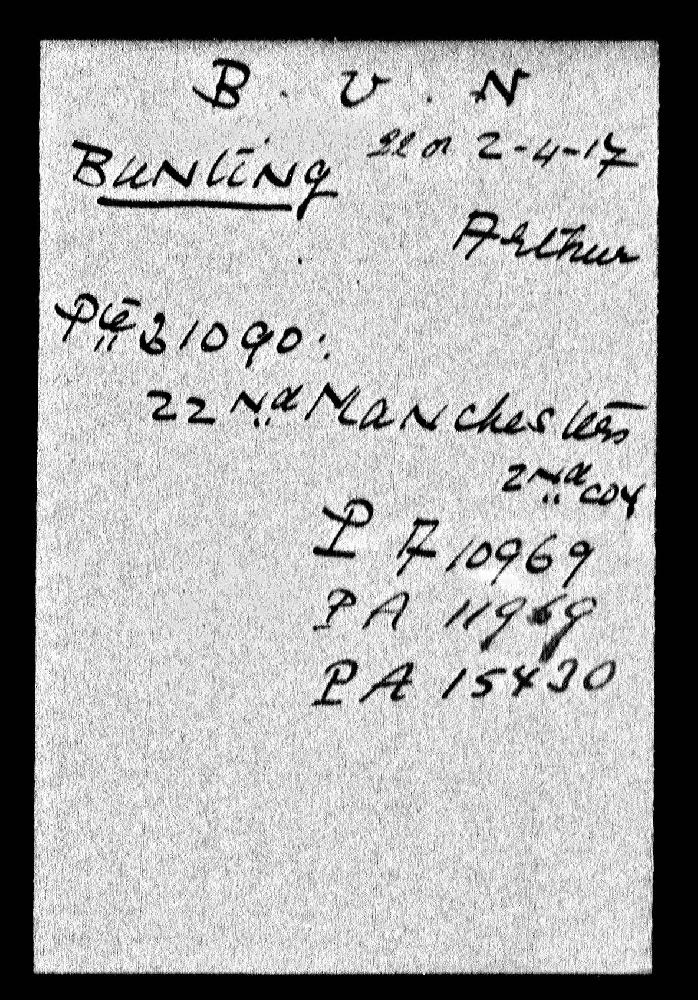
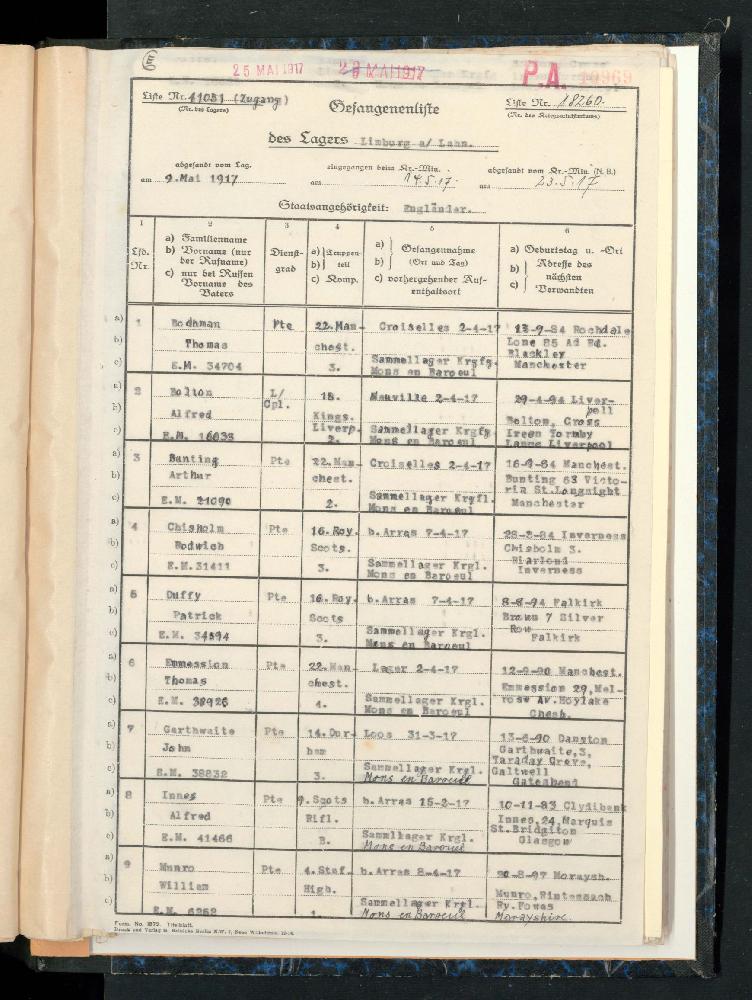
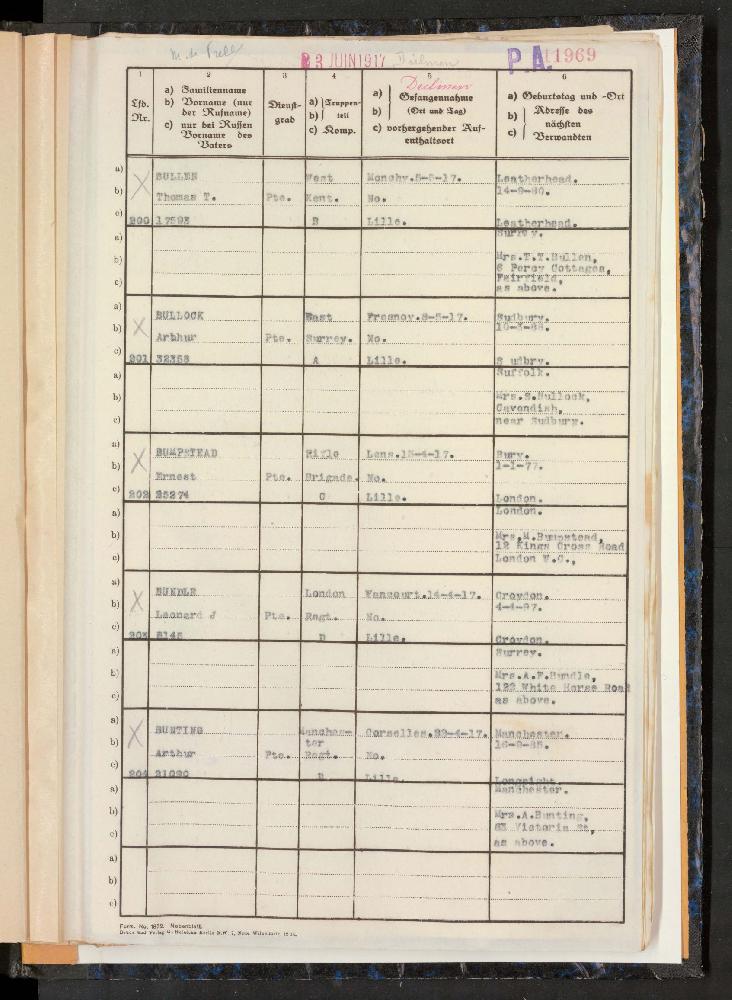
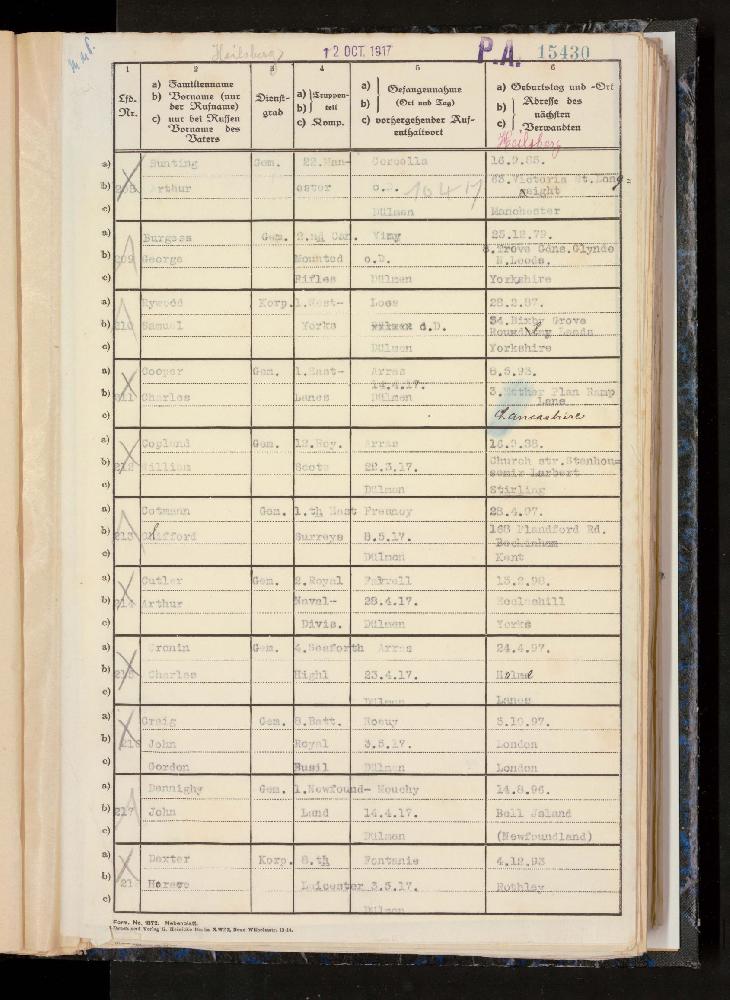
Images and documents relating to the capture and internment of Private A. Bunting as a Prisoner of War.
Arthur Bunting is recorded in several places as being captured at Croisilles by a German raiding party in March.
However, most official war documents just state 'missing' on 2nd April 2017, which also matches the information contained within the associated German PoW documents.
Following capture, it appears that Arthur was moved five or six times and held at different camps or transition centres mainly close to the French Belgium border, before finally ending up in the area now known as Klaipeda, Lithuania.
However, most official war documents just state 'missing' on 2nd April 2017, which also matches the information contained within the associated German PoW documents.
Following capture, it appears that Arthur was moved five or six times and held at different camps or transition centres mainly close to the French Belgium border, before finally ending up in the area now known as Klaipeda, Lithuania.
REFERENCE & FURTHER READING :
#1Many thanks to The ICRC who kindly gave permission to publish these documents here.
Records Glossary : https://grandeguerre.icrc.org/Content/help/glossary-en.pdf
1918
December 13th Memel (Death)
Arthur died#1 in the city of Memel (then part of the so called Free State of Prussia#2; now Klaipeda in Lithuania) approximately one month following the end of The Great War.
The cause of death was recorded as lung complications following a bout of influenza: This was possibly pneumonia.
During his stay in hostpital, a close friend stayed by Arthur's side and wrote to his wife back in England. In the letter, he told Arthur's wife that he was being looked after and she should not worry. A copy of the letter exists in a history museum located in the old town area of Klaipeda.
Unfortunately, Arthur died soon after the letter was written and approximately one month following the end of the War. He was buried in an area of Klaipeda that is now known as 'Old Vites Cemetery'.
The cause of death was recorded as lung complications following a bout of influenza: This was possibly pneumonia.
During his stay in hostpital, a close friend stayed by Arthur's side and wrote to his wife back in England. In the letter, he told Arthur's wife that he was being looked after and she should not worry. A copy of the letter exists in a history museum located in the old town area of Klaipeda.
Unfortunately, Arthur died soon after the letter was written and approximately one month following the end of the War. He was buried in an area of Klaipeda that is now known as 'Old Vites Cemetery'.
NOTES :
#1Some records indicate he died on the 15th December.
#2Memel later became part of Lithuania when it was occupied by them in the "Klaipėda Revolt" of 1923.
Other Mentions for Arthur Bunting :
Alfa (in Lithuanian)Vakarų Ekspresas (in Lithuanian)
Ministry of National Defence Republic of Lithuania. (in English)
Imperial War Museums (in English)
Great War Forum (in English)
GM 1914 (in English)
Krastogidas (in Lithuanian)
Lutheran Evangelical Church (in Lithuanian)
The War Graves Photographic Project (in English)
Friends :
Navigation :
Contacts :
- Online :Contact Form
- E-mail :webmaster at britishwargraves dot lt
- Tel LT :+37 (0)6717 9464
- Tel UK :+44 (0)7472 716028